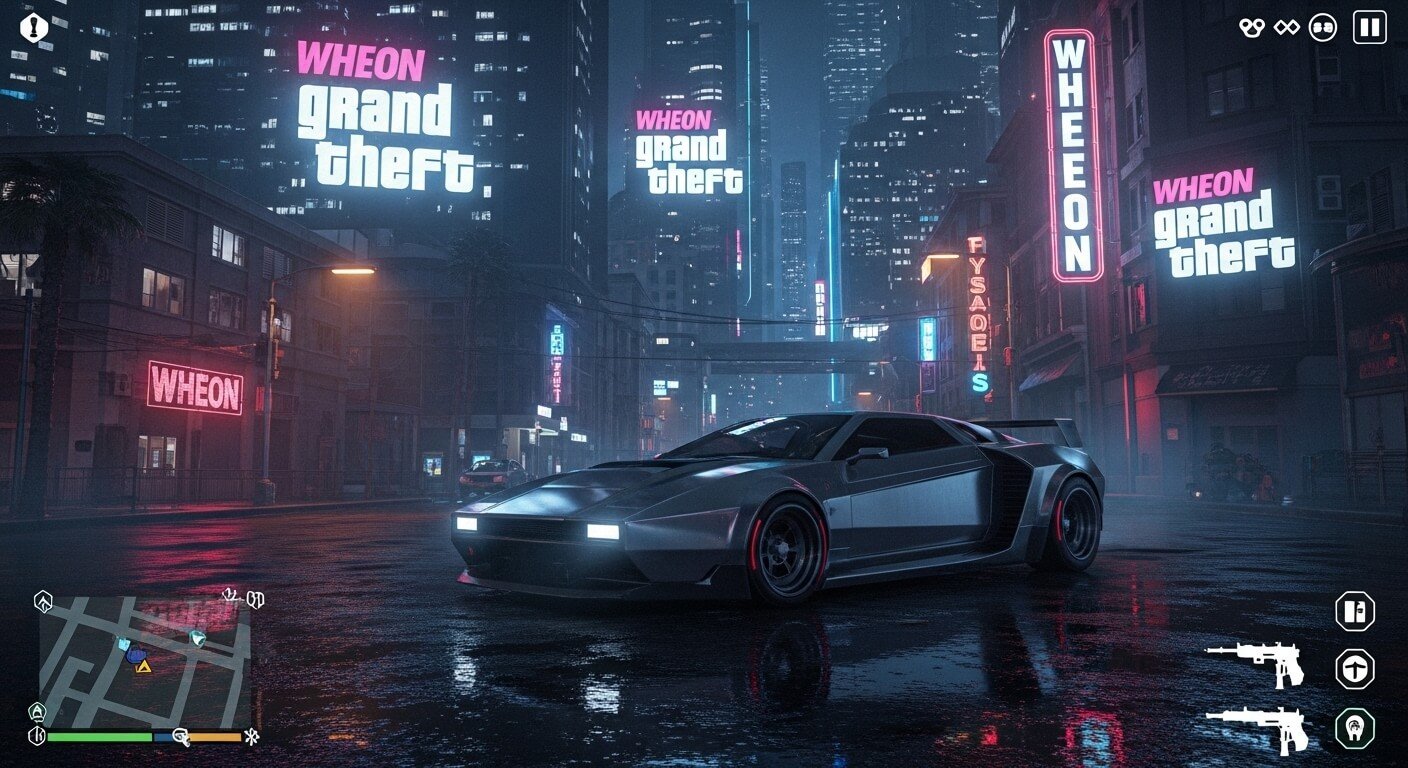
When you hear the name “Grand Theft Auto,” what comes to mind? For millions of people around the globe, it’s not just a video game title; it is a cultural touchstone, a digital playground, and sometimes, a lightning rod for controversy. But if you type Wheon Grand Theft Auto into a search bar, you might find yourself on a journey that goes deeper than just playing a game. You are stepping into the history of one of the most influential entertainment franchises ever created.
This article isn’t just a review or a walkthrough. It is a deep dive into the world of open-world crime simulators, exploring how they started, why they matter, and where they are going next. Whether you are a long-time fan who has spent thousands of hours in Los Santos or someone curious about the hype surrounding the latest releases, understanding the full scope of this series is essential. Let’s break down everything you need to know about the phenomenon that redefined interactive entertainment.
The Origins: From Top-Down Chaos to 3D Revolution

To understand where we are, we have to look at where we began. The story of Wheon Grand Theft Auto starts in the late 1990s, a time when video games were transitioning from simple pixelated sprites to more complex experiences. The original Grand Theft Auto (GTA), released in 1997 by DMA Design (which later became Rockstar North), was unlike anything else on the market.
A Radical Concept
At its core, the concept was simple yet radical: you play as a criminal, and your goal is to commit crimes to rise through the ranks of the underworld. There were no moral compasses, no “good guy” missions forcing you to save cats from trees. You stole cars, ran over pedestrians, and engaged in shootouts with police.
The early games featured a top-down perspective. While graphics were basic by today’s standards, the freedom they offered was unprecedented. Players could go anywhere in the city, steal any vehicle, and cause chaos without immediate failure states. This sandbox approach laid the groundwork for everything that followed.
The Leap to Three Dimensions
The real turning point arrived in 2001 with Grand Theft Auto III. This was the moment the series jumped into full 3D. Suddenly, the world felt alive. You weren’t just moving a sprite on a map; you were walking the streets of Liberty City, hearing radio stations, listening to pedestrians talk, and experiencing a narrative that rivaled Hollywood crime dramas.
- Immersive World: The city felt dense and reactive.
- Voice Acting: High-profile actors brought characters to life.
- Freedom: Players could ignore the main story for hours and just explore.
This shift didn’t just make the game popular; it changed the entire industry. After GTA III, every action game wanted to be an open world. The term “GTA clone” became common in gaming magazines, proving that Rockstar had set a new standard that everyone else was trying to reach.
Why the Series Captivates Millions

You might wonder, why do people love a game where the primary objective is to break the law? The answer lies in the psychology of freedom and storytelling. When discussing Wheon Grand Theft Auto, we are talking about a unique blend of satire, agency, and technical mastery.
The Power of Player Agency
In most video games, you are told exactly what to do. Go here, kill that, fetch this item. In Grand Theft Auto, the game gives you a goal, but how you achieve it is entirely up to you. Do you want to sneak in silently? Do you want to drive a tank through the front door? Do you want to ignore the mission entirely and spend the afternoon flying a helicopter over the ocean?
This level of agency creates a personal connection to the game. Every player’s experience is slightly different because their choices shape the gameplay. Statistics from various gaming surveys consistently show that players value “freedom of exploration” as the number one reason they return to open-world games, and GTA is the king of this genre.
Satire and Social Commentary
One of the most underrated aspects of the series is its sharp wit. Rockstar Games uses the fictional versions of American cities—Liberty City (New York), Vice City (Miami), and Los Santos (Los Angeles)—to hold a mirror up to society.
The games mock:
- Consumer culture and advertising.
- Celebrity obsession.
- Political corruption.
- The absurdity of modern life.
Through radio talk shows, billboards, and dialogue, the games offer a cynical but often accurate critique of the world we live in. It’s this layer of intelligence that keeps adults engaged, distinguishing it from mere “violence simulators.”
The Living, Breathing World
Technically speaking, the attention to detail in these games is staggering. In Grand Theft Auto V, for example, the developers created a wildlife ecosystem, dynamic weather patterns, and an economy that feels somewhat realistic. NPCs (non-player characters) have daily routines. They go to work, hit the gym, or hang out at the beach.
When you combine this with a soundtrack featuring hundreds of licensed songs across dozens of radio stations, the result is a world that feels lived-in. You aren’t just playing a level; you are visiting a place.
Grand Theft Auto V: The Titan That Refused to Age
No discussion about Wheon Grand Theft Auto is complete without dedicating significant space to Grand Theft Auto V (GTA V). Released in 2013, this title didn’t just break records; it shattered them. Over a decade later, it remains one of the best-selling entertainment products of all time, rivaling blockbuster movies and legendary music albums.
The Triple Protagonist System
GTA V introduced a innovative mechanic: the ability to switch between three different protagonists instantly.
- Michael: A retired bank robber living in witness protection, dealing with family issues and mid-life crises.
- Franklin: A young street hustler looking for a way out of the gang life.
- Trevor: A volatile, unpredictable psychopath and former military pilot.
This system allowed the story to be told from multiple angles, adding depth to the narrative. You could start a mission as Michael, switch to Franklin to provide sniper support, and then jump to Trevor to cause a distraction with an explosive device. It made the gameplay feel cinematic and varied.
Unprecedented Scale
The map of Los Santos and Blaine County in GTA V is massive. It includes a sprawling metropolis, vast deserts, mountain ranges, forests, and underwater terrain.
- Map Size: The game world covers approximately 49 square miles of playable land and water.
- Detail Level: Every building interior that matters is accessible, and the landscape is packed with hidden secrets.
The scale was so large that it required new rendering technologies to handle the draw distance and texture quality on consoles of that generation. Even today, the visual fidelity holds up remarkably well, especially on modern hardware.
The Online Phenomenon
Perhaps the biggest factor in GTA V’s longevity is GTA Online. What started as a multiplayer mode evolved into a standalone platform. Players create their own characters and enter a persistent online version of Los Santos.
Over the years, Rockstar has continuously updated GTA Online with:
- New heists and missions.
- Customizable businesses (nightclubs, bunkers, arcades).
- Vehicles, weapons, and clothing.
- Seasonal events and competitions.
This “games as a service” model kept the community active for years. At its peak, GTA Online regularly boasted millions of concurrent players daily. It became a social hub where friends would meet, not just to complete missions, but to hang out, race custom cars, or engage in chaotic free-for-all battles. The financial success of GTA Online has been a major revenue driver for Take-Two Interactive (Rockstar’s parent company), generating billions of dollars since its launch.
The Controversy Surrounding the Franchise
It is impossible to talk about Wheon Grand Theft Auto without addressing the elephant in the room: controversy. Since its inception, the series has been at the center of moral panics, legal battles, and political debates.
Violence and Moral Panic
Critics often argue that the games glorify violence, particularly against women and law enforcement. There have been numerous instances where real-world crimes were loosely linked to the game by media outlets, suggesting that playing GTA causes violent behavior.
However, extensive research tells a different story. Numerous studies conducted by psychologists and sociologists have failed to find a direct causal link between playing violent video games and committing real-world violence. In fact, as video game sales have skyrocketed over the last two decades, youth violence rates in many developed countries have actually declined.
Rockstar defends its content by categorizing the games as mature entertainment intended for adults, similar to R-rated movies like Scarface or Goodfellas. The games carry strict age ratings (M for Mature in the US, 18+ in Europe), and retailers are legally required to enforce these restrictions.
Legal Battles and Censorship
The franchise has faced lawsuits from various groups, including lawyers representing victims of real crimes, families of police officers, and even celebrities who felt parodied in the game.
- The Hot Coffee Mod: One of the most famous controversies involved a hidden mini-game in GTA: San Andreas that could be unlocked via a computer mod. This led to the game being re-rated to “Adults Only” temporarily and pulled from shelves, costing the company millions before it was resolved.
- International Bans: Several countries have banned specific entries in the series or demanded heavy censorship. In nations like Thailand and Brazil, certain versions of the game were restricted due to concerns over public safety and moral values.
Despite these challenges, the controversies often fueled sales. The “forbidden fruit” effect meant that more people wanted to see what the fuss was about, cementing the game’s status as a counter-culture icon.
The Cultural Footprint Beyond Gaming
The influence of Wheon Grand Theft Auto extends far beyond the console or PC. It has permeated music, film, fashion, and internet culture.
Music and Radio
The radio stations in GTA games are curated masterpieces. They feature real songs from real artists, spanning genres from hip-hop and rock to classical and talk radio.
- Many artists saw a resurgence in popularity after their songs were featured in the game.
- Original scores composed specifically for the games have won awards and are performed in concert halls.
- The “Vice City” soundtrack, filled with 80s hits, is often credited with sparking a renewed interest in synth-pop and new wave music among younger generations.
Memes and Internet Culture
If you spend any time on social media, you have likely seen GTA memes. From the iconic “Wasted” screen that appears when your character dies to the physics glitches that send cars flying into the stratosphere, the game provides endless material for humor.
- Streamers and YouTubers have built careers solely on creating GTA content.
- Challenges like “can I beat the game using only a bicycle?” or “chaos mode” videos garner millions of views.
- The game’s logic (or lack thereof) has become a shared language among gamers worldwide.
Influence on Other Media
The cinematic style of GTA has influenced filmmakers and TV showrunners. The non-linear storytelling, the gritty aesthetic, and the focus on anti-heroes can be seen in modern crime dramas. Conversely, the games themselves borrow heavily from cinema, hiring famous directors and actors to capture performances using motion-capture technology that rivals big-budget films.
Looking Ahead: The Future of the Franchise
As we move further into the 2020s, the question on everyone’s mind is: what comes next? The anticipation for the next mainline entry is palpable. When rumors swirl about Wheon Grand Theft Auto VI, the internet practically breaks.
The Wait for GTA VI
It has been over a decade since GTA V launched. In the fast-paced world of technology, this is an eternity. Fans are eager to see how Rockstar will push the boundaries again. Leaks and official teasers suggest that the next game will return to Vice City, potentially featuring a dual-protagonist story inspired by the Bonnie and Clyde dynamic.
Expectations for the next installment are sky-high:
- Next-Gen Graphics: Utilizing ray tracing and advanced AI to create photorealistic environments.
- Deeper Immersion: More interactive NPCs, advanced physics, and perhaps even VR compatibility in the future.
- Expanded Online: A seamless integration of single-player and multiplayer experiences, reducing loading times and increasing world persistence.
Technological Advancements
The hardware available today (PlayStation 5, Xbox Series X, and high-end PCs) allows for possibilities that were dreamt of ten years ago. Faster SSDs mean no more long loading screens, allowing for instant travel across the map. Improved processors can handle thousands of NPCs with unique behaviors simultaneously.
Furthermore, the rise of cloud gaming could mean that the massive world of GTA could be accessible on mobile devices and tablets without needing expensive hardware, expanding the audience even further.
The Enduring Legacy
Regardless of when the next game arrives, the legacy of the series is already secure. It proved that video games could be complex, narrative-driven experiences capable of tackling mature themes. It showed that players crave freedom and that open worlds could be profitable on a massive scale.
For aspiring game developers, GTA is the textbook example of world-building. For players, it remains the gold standard for what a video game can be.
Tips for New and Returning Players
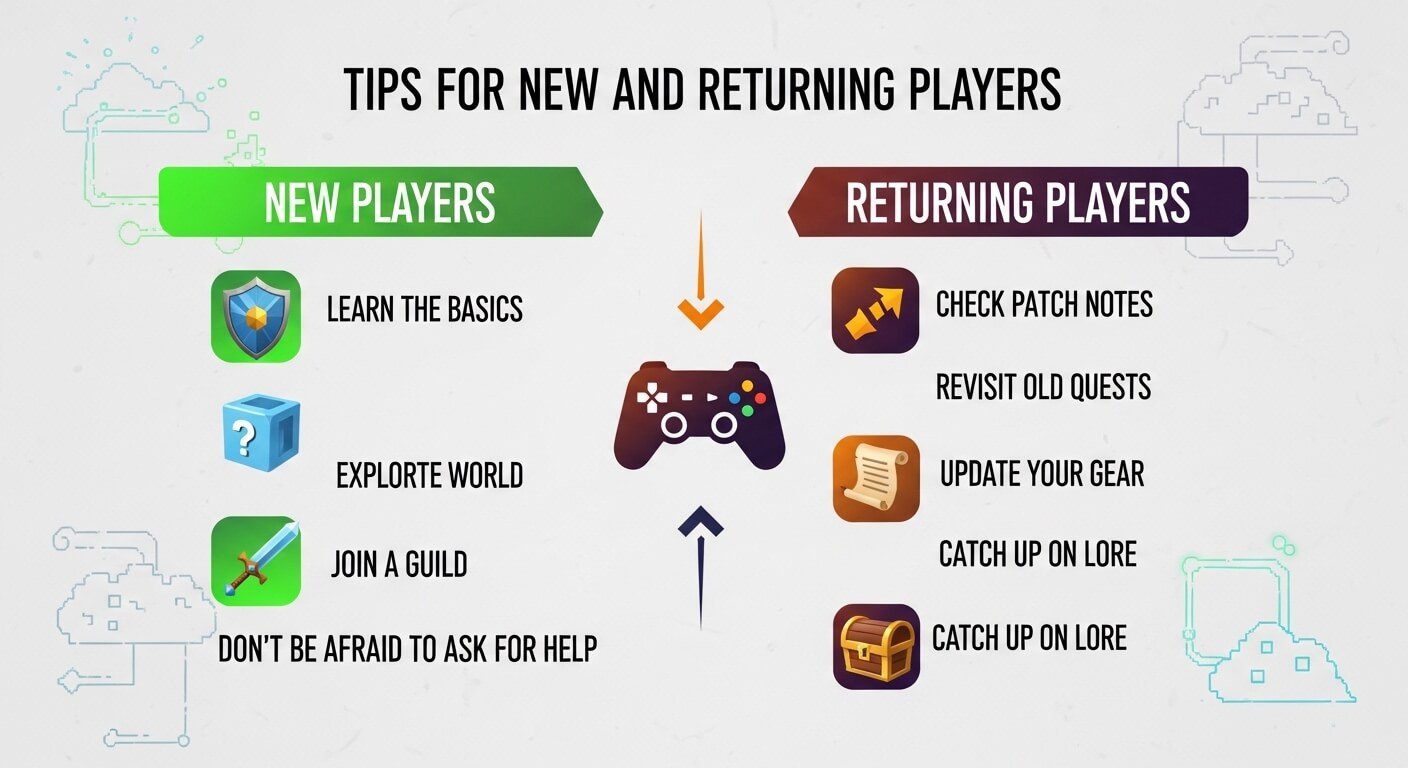
If you are diving into the world of Wheon Grand Theft Auto for the first time, or if you haven’t played since the early days, here are a few tips to enhance your experience:
- Take Your Time: Don’t rush the main story. Some of the best moments happen when you wander off the beaten path. Explore the countryside, dive underwater, or just sit and listen to the radio.
- Respect the Laws (Sometimes): While breaking the law is fun, having a high “wanted level” can make simple tasks difficult. Learn how to lose the police by changing vehicles or hiding in alleyways.
- Invest Wisely: In games with economic systems, like GTA V, investing in the stock market (especially based on mission outcomes) can make you incredibly wealthy, allowing you to buy the best cars and properties.
- Customize Everything: Whether it’s your car, your character’s clothes, or your weapons, customization adds a personal touch that makes the game more engaging.
- Join the Community: If you play Online, join a crew or find friends to play with. The game is significantly more enjoyable when experienced with others, whether you are cooperating on a heist or causing chaos together.
Conclusion: More Than Just a Game
When we analyze Wheon Grand Theft Auto, we are looking at more than lines of code and polygon counts. We are examining a cultural force that has shaped how a generation interacts with digital media. From its humble beginnings as a top-down racer to the sprawling, hyper-realistic universes of today, the series has consistently pushed the envelope.
It challenges us to think about morality, freedom, and the nature of virtual worlds. It entertains us with humor, action, and incredible storytelling. And yes, it sparks debate, which is a sign of its relevance.
As technology continues to evolve, so too will the worlds Rockstar creates. But the core appeal will likely remain the same: the thrill of freedom, the joy of exploration, and the ability to live out fantasies that are impossible in the real world. Whether you are a critic, a casual player, or a hardcore fan, there is no denying that Grand Theft Auto has left an indelible mark on history.
The road ahead is long, and the cities are vast. So, hop in the driver’s seat, turn up the radio, and see where the open road takes you. After all, in this world, the only limit is your imagination.